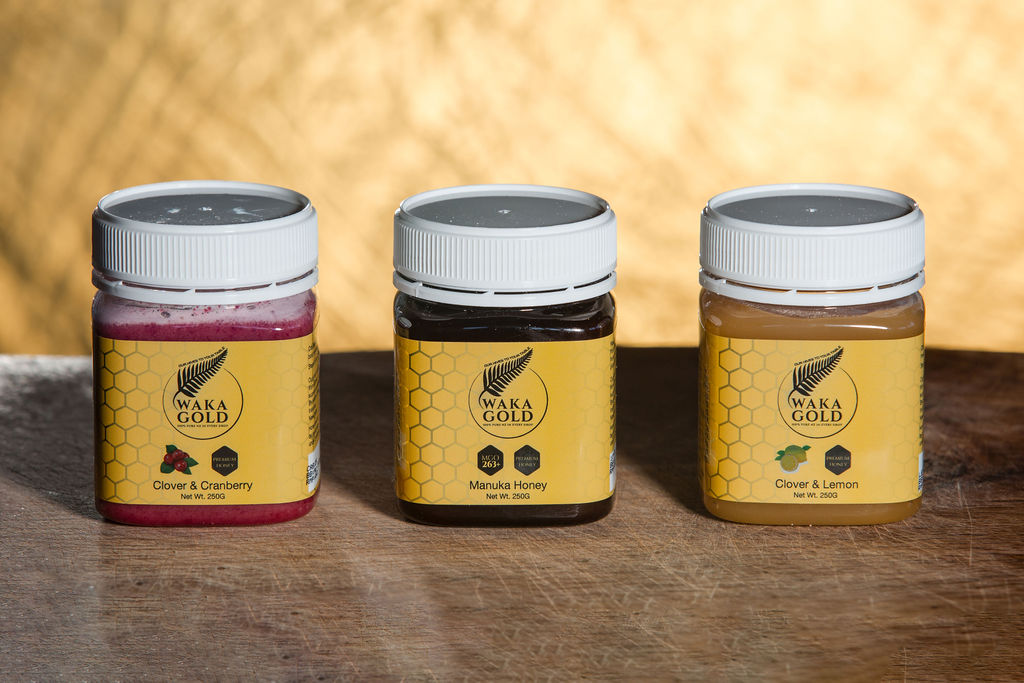
If you've stood in front of a shelf of Mānuka honey wondering why one jar costs more than the next, the number on the label is the answer. Here's how to read it.
What does MGO mean?
MGO stands for methylglyoxal, a compound found naturally in Mānuka honey. It's what the number on the jar measures.
The number tells you how much methylglyoxal is in the honey, in milligrams per kilogram. MGO 263 means at least 263mg of methylglyoxal per kilo. MGO 829 means at least 829mg. The higher the number, the more methylglyoxal in the jar, and generally, the higher the price.
Which one is yours?
MGO 263+: the everyday jar. Toast, yoghurt, a spoon in your tea.
MGO 829+: our top jar. The cheese board, the gift, the slow Sunday.
You don't need the biggest number. Pick the one you'll actually open.
Is the number real?
Not every number on every label has a certificate behind it.
A jar can print any figure. The certificate is what makes it mean something. Ask for it.
At Waka Gold, every batch is independently lab tested, and we print a number below what the lab finds. Bigger numbers sell for more. We know. Ask us for the certificate for the batch in your jar.
How to read a label
When you're choosing Mānuka honey, look for three things:
- A clear MGO number on the label
- A lab certificate you can ask to see, not just the brand's word
- New Zealand origin, stated plainly
Get those three right and the number on the jar is a number you can trust.
Our jars are on the shop. MGO 263+ for every day. MGO 829+ when you want the top of the range.